VOXARIA
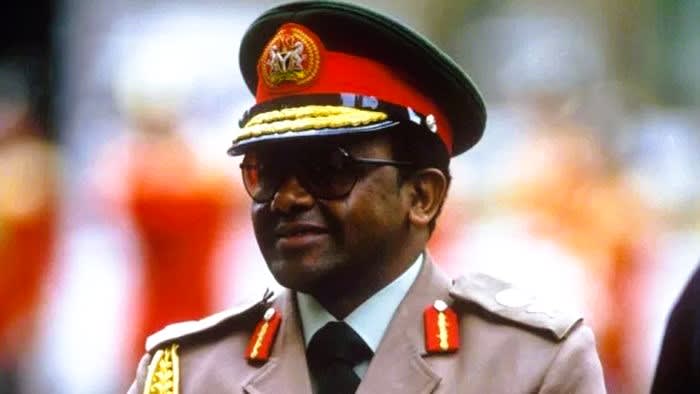
A fresh controversy has erupted over the circumstances surrounding the death of Nigeria's former military Head of State, General Sani Abacha, after retired DSS Assistant Director Dennis Amachree challenged Hamza Al-Mustapha, Abacha's former Chief Security Officer, to make public the CCTV footage he claims to possess from the late leader's final hours.
The dispute traces back to Amachree's recently published memoir, DSS @ 40: My Journey Behind the Shield, in which he offered his own account of the events surrounding Abacha's death on June 8, 1998, describing it as resulting from a cardiac episode that occurred during the early hours of that morning at the Presidential Villa Guest House in Abuja. Amachree, who says he was directly involved in the investigation that followed Abacha's death, maintains that the account in his book reflects his firsthand experience and knowledge of the incident.
Al-Mustapha, however, has firmly rejected that version of events, alleging that Amachree's account was written at the direction of unnamed third parties rather than reflecting genuine firsthand knowledge. According to Al-Mustapha, he retains CCTV footage from that night that would contradict the narrative presented in the memoir, though the footage itself has not been made public.
Responding to those claims in an interview with The Nation, Amachree pushed back sharply, insisting that Al-Mustapha should substantiate his objections with verifiable evidence rather than personal attacks. He argued that if Al-Mustapha genuinely possesses footage capable of disproving his account, the only credible path forward would be to release it publicly for independent scrutiny.
Beyond disputing the substance of Al-Mustapha's claims, Amachree also defended the credibility and provenance of his memoir, stating that the book underwent the DSS's internal review and vetting process before its release, as part of activities marking the agency's 40th anniversary. He noted that the DSS had invited him from the United States specifically for the book's official unveiling, an event that drew senior security officials, state directors of the service, and members of the diplomatic community — details he says lend institutional credibility to his published account.
The exchange also took a personal turn, with Amachree rejecting Al-Mustapha's characterisation of him as "a boy," a remark he said understated his standing within Nigeria's security establishment. He pointed to his own career trajectory, noting that he retired from the DSS as an Assistant Director — a rank he equated to that of a Brigadier in the Nigerian Army — compared to Al-Mustapha's retirement rank of Major.
The disagreement between the two men adds another chapter to the long-running and often contentious public debate over the exact circumstances of Abacha's death, a subject that has generated competing narratives among former officials of his administration for more than two decades. Al-Mustapha, who has remained one of the most prominent and controversial figures associated with the Abacha era, has previously urged Nigerians to disregard accounts he considers unfair, particularly given that Abacha himself is no longer alive to respond to the claims circulating about his final hours.
As of now, no CCTV footage has been publicly released by either party, leaving the competing accounts of one of Nigerian history's most scrutinised moments still unresolved — and increasingly caught between institutional record and personal recollection nearly three decades after the fact.